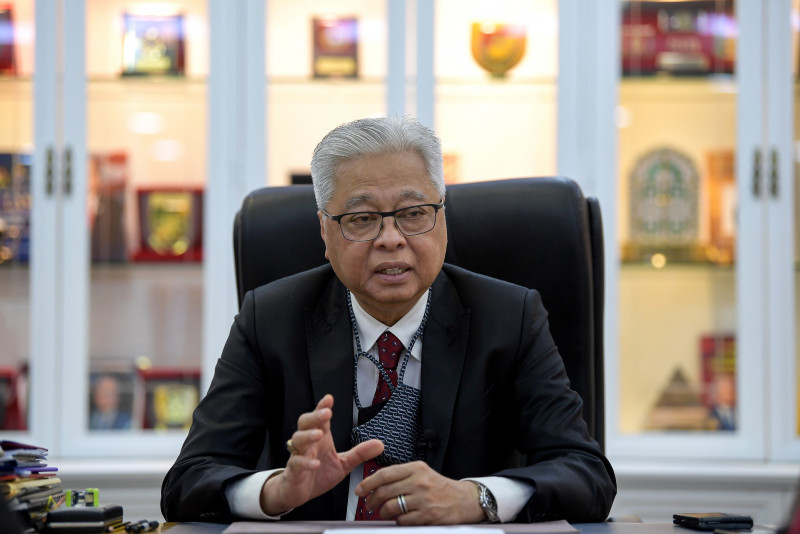

KUALA LUMPUR – More than a few eyebrows were raised on Thursday when Prime Minister Datuk Seri Ismail Sabri Yaakob announced a score of 90% for a Cabinet that has constantly come under heavy criticism.
This comes amid spiralling prices of basic goods, questionable political appointments into the government, failure to resolve core issues and the introduction of baffling policies.
Weighing in on the 100-day Keluarga Malaysia government report card, observers are questioning the manner in which the scoring was done and how the cabinet was able to obtain high marks for a relatively sub-par performance.
Sunway University Business School Professor of Economics Yeah Kim Leng took particular issue with the government’s decision to appoint its own agency, Malaysian Administrative Modernisation and Management Unit, to conduct the study.

This, he argued, could have led to a lopsided assessment, with questions posed to the public might have been framed as such to favour the government.
“This kind of survey is widely based on public perception, so you need an independent, third party entity to conduct the study,” he told The Vibes.
“Otherwise, there is bound to be bias scoring. Typically, this is the case when you hire your own internal unit to do a survey. That would be one of my main criticisms.”
Beyond that, Yeah said Ismail Sabri also failed to elaborate on the scores given to each ministry and list out their respective strengths and weaknesses for the public to see.
He added that this is critical in ensuring all the ministries are held accountable and are able to improve on themselves.
“This is needed to help the ministries identify any weaknesses and shortcomings, and will motivate them to do better. The end purpose of this survey should be about raising the cabinet’s performance.”
At the launch of the 100-Day Aspirasi Keluarga Malaysia on Thursday, Ismail Sabri announced that his ministers scored about 90% in their overall performance in the first 100 days of administration.
The score was supposedly given after a survey on more than 190,000 Malaysians, with the ministries gauged based on their core service (50%), minister’s performance (25%) and public perception on them (25%).
Was the score based on mere plans?
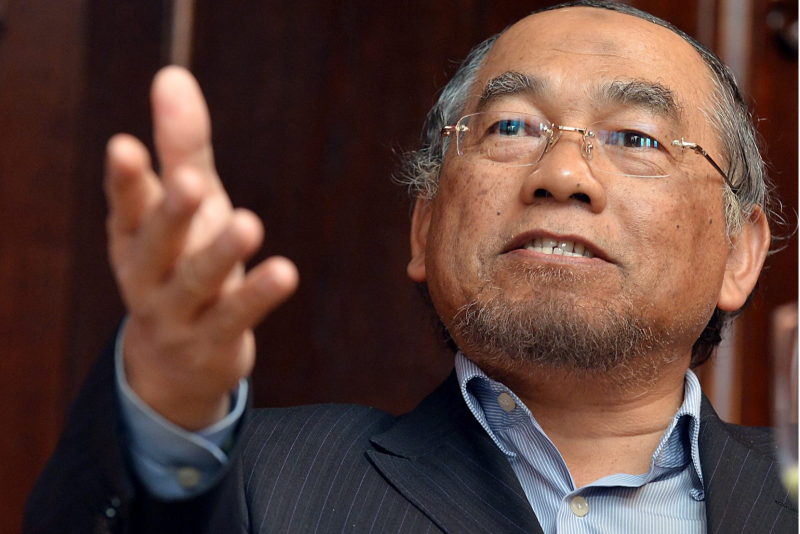
Universiti Tun Abdul Razak academician Prof Dr Barjoyai Bardai said Ismail Sabri ought to be more transparent at how each specific ministry is given a score, but said assessing the cabinet based on the 100 days is a good start.
He also questioned if the assessment is based purely on plans that have been announced but are yet to be executed, as implementations of government programmes have yet to start.
“If we look at the government, various programmes and policies have been announced, including the Keluarga Malaysia, 12th Malaysia Plan and Budget 2022, but these remain just plans.
In terms of implementation, they are yet to be seen. I feel like much of the items that have been implemented are based on announcements and policies under Tan Sri Muhyiddin Yassin.”
Barjoyai added that based on Ismail Sabri’s explanation of the 90% score, it appears the assessment is not solely based on the performance of the ministers, but taking into account that of the civil servants.
Meanwhile, in a statement, DAP supremo Lim Kit Siang has urged the prime minister to release details of the 100 days report card and to reveal what mark each ministry received.
The Iskandar Puteri MP said if Ismail Sabri fails to do this, the 90% score given to the cabinet remains an arbitrary figure.
“Surely, he has asked some professionals to give a score-card of each of his ministry, based on which he arrived at the 90% score, and that he had not given an arbitrary figure which he could neither defend nor justify.” – The Vibes, December 11, 2021